

My sincere apologies! I found last week’s Founder Fridays in my drafts folder. So, I’m sending it tonight. You’ll see another one tomorrow morning as usual.
Here’s my April playlist.
The Brand Age
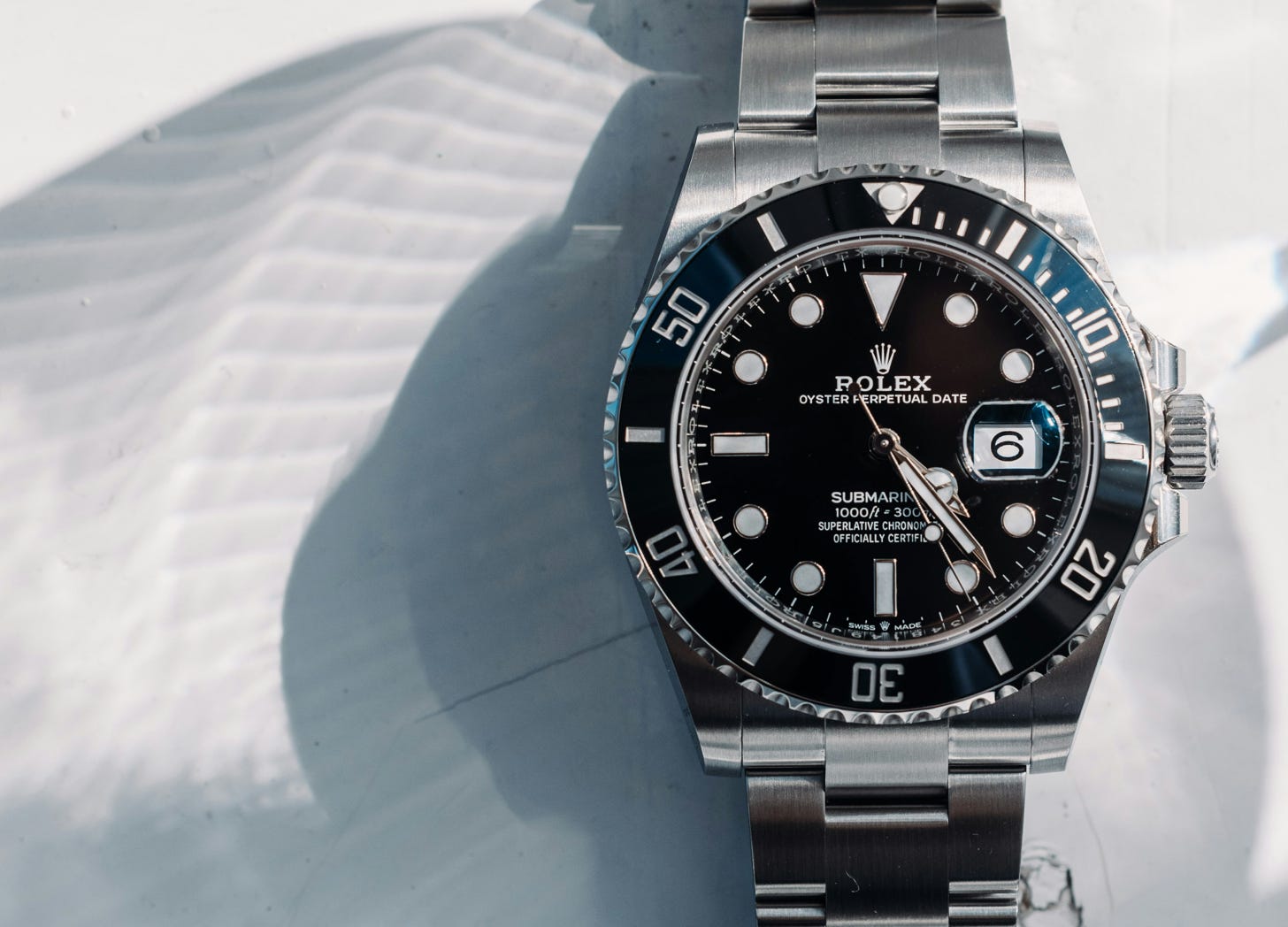
Between the early 1970s and early 1980s, unit sales of Swiss watches fell by almost two-thirds, yet the handful of watchmakers who survived ended up more profitable than ever, not by making better watches but by transforming themselves into luxury brands selling expensive status symbols. That pivot reveals the most important thing technology does to any industry: it eventually makes substantive product differences disappear, which means brand, what's left when everyone can match your performance, becomes the only game in town. The critical tension every founder must understand is that branding and design are fundamentally opposed, since design seeks the single right answer (which converges with competitors), while branding requires distinction (which demands moving away from right answers and toward the deliberately unreasonable). The deeper lesson for founders is not to copy the brand playbook but to follow genuinely interesting problems, build during the golden age of your field, and recognize the inflection point before technology commoditizes the thing you've spent years perfecting. Paul Graham (25 min)
Seed Checks, Fewer Bets
Q1 2026 was the largest venture quarter ever recorded, with $300 billion poured into roughly 6,000 startups globally, up 150% both quarter-over-quarter and year-over-year. The obvious reaction is that it’s all four mega-deals (OpenAI, Anthropic, xAI, and Waymo combined for $188B), but even stripping those out you’re looking at a ~$112 billion quarter, which would itself be a record in most prior years. About 80% of the capital went to AI companies, up from 55% a year ago, with early-stage funding up 41% and seed dollars up 31% year-over-year. The seed data carries one important tension founders should track: while total dollar investment was up, deal count fell 30% from Q1 last year, meaning VCs are writing fewer bets with significantly larger checks, a signal that the flight to quality at the early stage is accelerating fast. A16Z (3 min)
Discount The POC, Not The Price
The enterprise buyers actually spending the most on AI deliberately run multiple tools for the same job — meaning the competitor you’re discounting against may already be in the budget alongside you, and you’re giving away margin you never had to give. AI price wars are fought on the wrong battlefield: the real threat isn’t the cheaper competitor but your customer’s engineering team, and as inference costs keep falling, the only defense that works is differentiation that’s genuinely expensive to rebuild internally — deep workflow integration, proprietary training data, embedded customer success. Take your next competitive deal where you’re tempted to cut price and instead cut the POC — offer free credits, unlimited usage during evaluation, or a zero-friction 30-day trial, then hold your contract price firm once they’re hooked. Buyers consistently chose the tool that proved indispensable during evaluation, not the cheapest one — founders who protect their price and win on adoption will enter the market consolidation phase with better unit economics and customers who stay because switching is genuinely costly. A16Z (8 min)
Founder FAQ: Why Drafting Strong Contracts Is Important For Startups?
Most founders treat contracts like checkbox tasks, which is exactly why the majority of startup legal disputes trace back to the same three drafting mistakes. The foundation isn't the contract itself but a term sheet that locks in price, payment terms, IP ownership, and dispute resolution before formal drafting begins, because walking back agreed-upon deal points mid-draft is both expensive and relationship-damaging. Strong contracts require precision over jargon: specific obligations with hard deadlines, active voice that names who does what, and key terms defined clearly and used consistently throughout, since ambiguity is not just a nuisance but the soil where disputes grow. Your startup lawyer's real value is not writing legally compliant language but knowing which deal points are actually worth fighting for in your specific situation, and moving fast enough that legal process doesn't kill deal momentum. Westaway (4 minutes)
Startup Funding Guides
I’ve put together a series of guides to equip founders to excel at fundraising. These guides break down the deal term-by-term and give you negotiation tips so that you can speak to investors with confidence.
Convertible Note: Guide / Video
Saving Time and Money on Legal
When we met this Series B startup, they were frustrated with their law firm’s slow turnaround and high fees. Contract reviews took four to six weeks, and they charged $250,000 annually for basic work. The startup wanted to reduce sales cycle times and legal spend. They switched to General Counsel at Westaway. In year one, we 1) saved them about $200,000 in legal fees; 2) shortened their sales cycle by about four weeks; and 3) our streamlined processes saved their ops team eight to ten hours per month previously spent managing legal. By switching to Westaway, they expedited deal closures, saved hundreds of thousands in legal bills and regained one day per month in productivity. If you’re curious if we could save you time and money, let’s talk.