


Happy Friday.
First Friday of the month means funding data, which you’ll find below. But today I’m also sharing something special: a long-form essay on startups, identity, and mental health based on my conversation with Jane Chen. Jane built a company that saved a million babies and nearly destroyed herself doing it. Our conversation stuck with me for days. I kept thinking about my own drive, where it comes from, what it costs. If you’ve ever felt like your self-worth rises and falls with your company, this one’s for you.
Additionally:
The Wound That Drives You
By every marker that matters in the startup world, Jane Chen was a success. TED Fellow. Young Global Leader. Economist Innovation Award winner. She had designed a portable infant warmer at Stanford, moved to India for four years to scale it, and built a social enterprise from nothing. Beyoncé donated $125,000 to help distribute her product across Sub-Saharan Africa. She presented at the White House. She was the incubator lady, the woman who saved babies.
And after a decade of building Embrace, she was having panic attacks so severe she could not get through a meal.
“I was having panic attacks constantly,” Chen told me when we sat down recently. “I was really depressed. I was having problems sleeping. It felt like I was barely hanging on. I couldn’t get through a meal sometimes, or even reading a chapter in a book, without feeling this sense of real shakiness even when nothing was happening around me. It was terrifying.”
Her identity had been so fused with Embrace that the company’s struggles became an existential crisis. “I just didn’t know where I stopped and the work began,” she said. “It was so enmeshed. My whole identity was wrapped up in this company. I felt like I had failed. I didn’t know who I was anymore.”
Chen has written a book about what came next. Like a Wave We Break explores the connection between trauma, entrepreneurship, identity, and healing. I sat down with her to discuss the patterns she uncovered in herself and sees in founders everywhere. (Click here to watch the full conversation.) What she described is something most founders recognize but rarely name. And understanding it might be the most important work you do this year.
The Wounded Striver Pattern
Psychologist Gabor Maté calls it “wounded striving,” and it shows up in founders with startling regularity. The pattern looks like this: an early experience of feeling powerless, inadequate, or unsafe creates a core belief that you are not enough. That belief becomes rocket fuel. You build companies, chase impact, accumulate recognition. But no achievement fills the hole because what you are seeking externally cannot be found internally.
The goalpost keeps moving. You raise your Series A, then fixate on Series B. You hit your revenue target, then set one twice as high. You tell yourself that the next milestone will finally prove something. It never does. You get there and wonder why you still feel empty.
Chen discovered through years of therapy and healing work that childhood physical abuse had shaped her entire trajectory. “I grew up with a lot of physical violence in my childhood,” she said. “My father was physically violent. And I finally, through this healing work and exploring the things that happened in my childhood, finally it hit me that feeling so powerless throughout my childhood had driven me to help the most powerless people in the world. I wanted to protect vulnerable children in ways that I hadn’t been protected.”
This is not unusual. Research from the Wellbeing Project, which works with hundreds of social entrepreneurs, confirms the pattern. “There’s some kind of early wounding that drives us,” Chen explained. “We do this work, we give our all to it. We burn bright and then we burn out.” And it is not limited to social entrepreneurs. A growing body of research shows that founders exhibit this pattern at elevated rates.
It makes a certain kind of sense. Trauma can increase capacity for risk-taking, which makes founders more likely to take the leap in the first place. But that same trauma keeps the nervous system in permanent fight-or-flight. “We don’t feel enough, or we put this blame on ourselves for what happened in the past,” Chen said. “And so we end up wanting to prove ourselves constantly. But of course that never works because what you’re seeking externally, if you can’t find it internally, then the goalpost keeps moving and you’ll never find what you’re looking for.”
The paradox is brutal. Chen saved babies. She received awards and recognition that most founders dream about. And none of it touched the wound. “No matter how many babies I saved or how much recognition I received, I never felt like I was enough,” she said. “I kept pushing, pushing, pushing. And it destroyed me. At the end of that ten year period, I had a complete mental and physical breakdown. I thought I was invincible up to that point. I had no idea that I could be in such a fragile state.”
When Identity and Company Merge
Founders often describe their company as their baby. Chen’s situation was more extreme. She was “the incubator lady,” the woman who saved babies. For years, when people asked why she had given up a lucrative path for a startup in India, she could not articulate the answer. “I seriously just had no consciousness of how it was affecting me,” she said. She did not know that her purpose and her pain were the same thing.
The external recognition made it worse, not better. “Having all of those accolades and that recognition made the pressure even bigger in some ways. I cared so deeply about my work. It was all entangled.” She had paved her own way against her parents’ wishes, choosing social enterprise over the traditional paths they expected. But within that choice, she still needed to prove herself. The wound found a new venue.
The warning signs accumulated over years. Constant illness as her immunity collapsed. Working patterns she describes as “so unhealthy.” An absence of joy. “I loved my work in a sense, in that it was so impactful. But I was working in ways that were so unhealthy, just to the point of total burnout. I wasn’t balanced. I didn’t really have joy in my life, honestly, because it was all about one thing.”
When her body signaled exhaustion, she overrode it. When her mind signaled burnout, she pushed harder. This is what trauma does, according to Bessel van der Kolk’s The Body Keeps the Score, a book central to Chen’s healing. “Trauma is not something that happens in your past that you keep in the past,” Chen explained. “It rewires your brain and your nervous system. It affects every part of your life.”
The result is a disconnection from the body’s signals. “When my body was telling me to slow down or that I was exhausted, I just pushed past all of those signals and I kept going to the point of breakdown.”
When Embrace faced serious setbacks after a decade of work, it was not just a business failure. It was an existential crisis. When your entire sense of worth depends on what you achieve, a setback does not feel like a setback. It feels like evidence that the wound was right all along, that you really are not enough.
This is the trap. Wounded striving promises that enough success will finally prove your worth. But because the wound predates the company, no company outcome can heal it. Even success feels hollow. “You get there and you’re like, why do I still feel empty?” Chen said. “I should be on top of the world. Why do I still feel like this?”
What Healing Actually Looks Like
Chen spent over eighteen months recovering enough to work again. She tried, in her words, “every healing modality I could get my hands on.” Meditation retreats, ten-day silent sits, psychedelics, frog poisoning, therapy, breathwork. She approached healing the way she had approached Embrace. “I kind of put on the CEO hat and I was like, okay, I’m gonna heal the shit out of myself. I had my spreadsheet and I had all the modalities and if something didn’t work, I’d pivot and do the next thing. I took a design thinking approach.”
She laughed when she told me this. “That’s not really how healing works, it turns out.”
But some things did work. Two practices proved most transformative. The first was learning to feel emotions rather than override them. This sounds simple. It is not. “It is so important to process how we feel, whether that is anger or sadness, anxiety, fear,” Chen said. “When we don’t take the time to do that, when we suppress our emotions, they resurface more intensely, often as anxiety, depression, or burnout.”
Research suggests an emotion takes about ninety seconds to move through the body when we actually let it. Most of us, especially high-achievers, interrupt that process constantly. “We live in a society that’s all about escapism,” Chen said. “When we feel something difficult, what do we do? We go to our phones, we’re on social media, we use substances. We will do anything to avoid feeling those feelings because we numb out.”
Chen started meditating every morning as her first act of the day. She took up surfing, which forced her to stay present in her body rather than her head. “I’m very heady, super analytical. Everything in my past was about my intellect. Learning to feel what my body is telling me, listening to those signals, that was really hard for me.”
The second transformative practice was Internal Family Systems therapy, which Chen now uses in her leadership coaching. The approach treats the psyche as containing multiple parts: protectors like the perfectionist, the overachiever, the inner critic. These parts spring up to protect us from deeper wounds. And then there are “exiled” parts carrying difficult emotions like rejection, shame, and abandonment.
“The practice is about identifying all these different parts of yourself, having the awareness, and then treating these parts with love and compassion,” Chen explained. “Not trying to banish them or do away with them, but just really loving them. It sounds so simple, but it allows you to relate to yourself differently.”
What the practice helped Chen see was that all her protective parts were protecting a little girl who never felt like she was enough or worthy. “For so long, I wanted all these external things to show her, other people to show her. And of course that never worked.” She now keeps a photo of herself at five years old on her desk and has daily conversations with that part of herself.
“It’s not like those critical voices go away,” she said. “But when they arise, now I have another voice as well. The inner dialogue in my head has shifted. Instead of being annoyed, I just say, thank you for protecting me. That voice telling you you’re not enough was there to protect you. It’s a very young part of ourselves. And I just say, thank you for being here.”
Founders fear that addressing psychological wounds will dull their edge. Chen found the opposite. “For most of my life, I believed resilience was about pushing, pushing, pushing. If I was tired, push harder. Now I believe resilience is about self-compassion. When we have this inner sense of enoughness, then we can take risks and fail and we get up and brush ourselves off and keep going because we know we’re going to be okay. It’s not going to devastate you when you fail.”
Healed Striving in Practice
The story of Embrace itself reflects this arc. After the company nearly collapsed, it found new life through a partnership with Phoenix Medical Systems, an Indian medical device manufacturer that took over production and distribution. This year, seventeen years after Chen and her co-founders set the goal as Stanford students, Embrace reached one million babies.
Chen hired a new CEO and stepped down. Most founders cannot do this. The identity fusion is too complete. Walking away feels like self-annihilation. But Chen had done the work to separate her sense of self from the company’s outcomes.
When someone asked if she would ever do anything as impactful again, she laughed. “Are you kidding me? This next thing is way more impactful. I have more ambition. But the way I’m going to approach it is from a place of balance and joy so that I can give my all to it in a healthy way.”
She described a vision from a meditation retreat before her book launch: “This image of riding an endless wave and being so in touch with flow. And I thought, that is what I want. It’s not about what I do. It’s how I do it. I want to do it from a place of joy and flow as opposed to this place of contraction and striving and never feeling like I’m enough.”
She now coaches leaders and works with traumatized children. Full circle. The difference is not the presence or absence of ambition. It is whether that ambition comes from proving your worth or expressing your values. “How can I make impact for the rest of my life?” Chen asks. “With Embrace, yes, I did make impact and it was amazing that we achieved our goal. But at what cost? It took me over a year and a half to just recover so I could work again. I will never do that to myself again.”
Healed striving still drives you forward. It just does not require destroying yourself to get there.
The Leadership Implications
This is not just about individual wellbeing. Chen pointed to Google’s Project Aristotle, which found that the most important factor in high-functioning teams was not skillset or intelligence. It was psychological safety.
“But to leaders, my question is, how do you create this for your team if you don’t have this within yourself?” Chen asked. “Psychological safety isn’t created through strategies and slogans. It’s set through the attitude of the leader. The more inner work we do to heal ourselves, that comes out in our relationship with everybody else.”
The Question Worth Asking
If you recognized yourself in any of this, you are not alone. Most founders do. The question is not whether you have wounds, because you probably do. The question is whether you are willing to look at them before they force you to.
Chen’s path required a breakdown. It does not have to require yours. “I would love to prevent people from having to go through that,” she said. “If you don’t have to go there and you can learn these things and live a more balanced, healthy, joyful life, then that’s the best outcome.”
Start with honest inquiry. Where does your drive actually come from? What are you trying to prove, and to whom? Can you sit with difficult emotions for ninety seconds instead of reaching for your phone?
The dedication in Chen’s book reads: “To the part of each of us that ever felt like we weren’t enough. You are enough, just as you are.”
The answers may be uncomfortable. They may also be the beginning of building something sustainable, including yourself.
Now… Check out the the November venture capital funding data from AngelList.
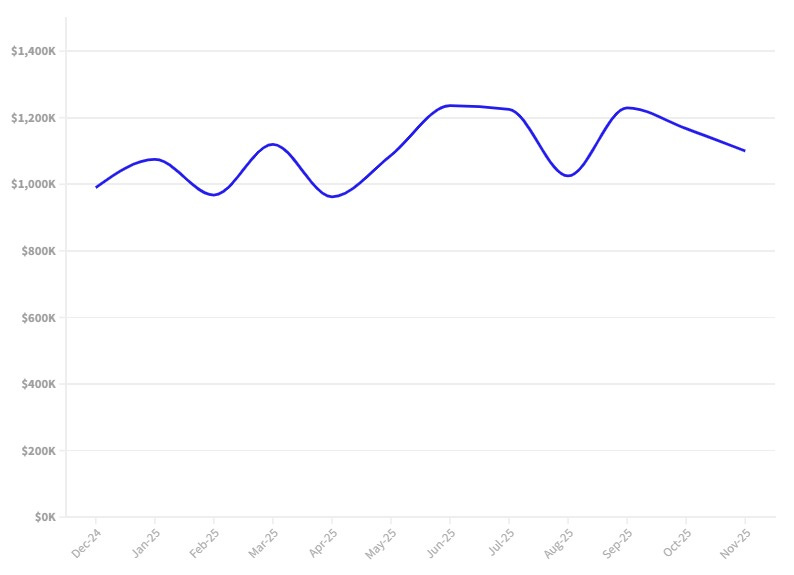
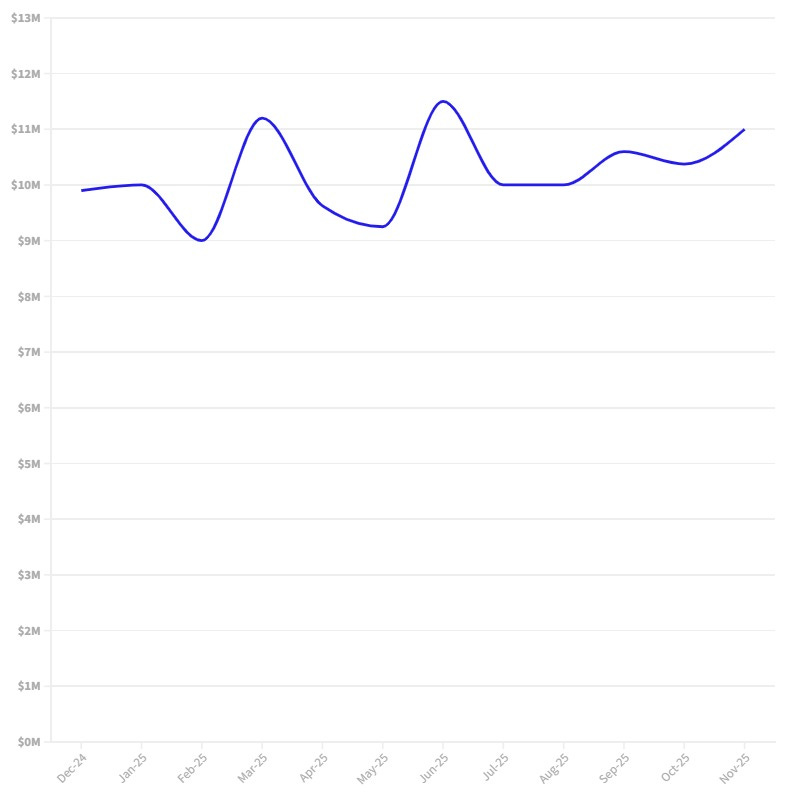
Pre-Seed
Median Money Raised:
$1,100,000
Median Post-Money Valuation:
$11,000,000
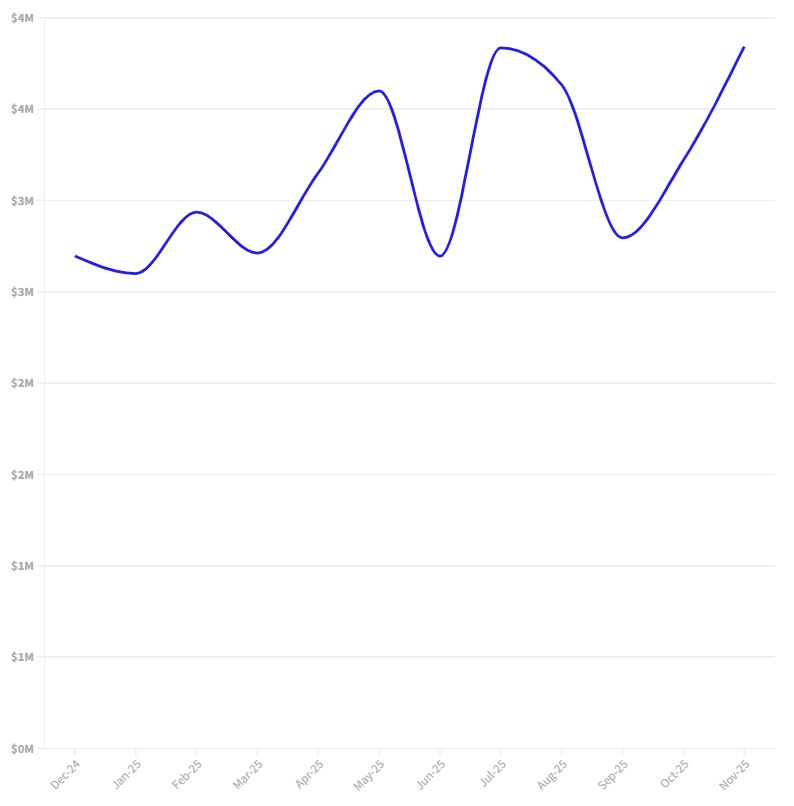
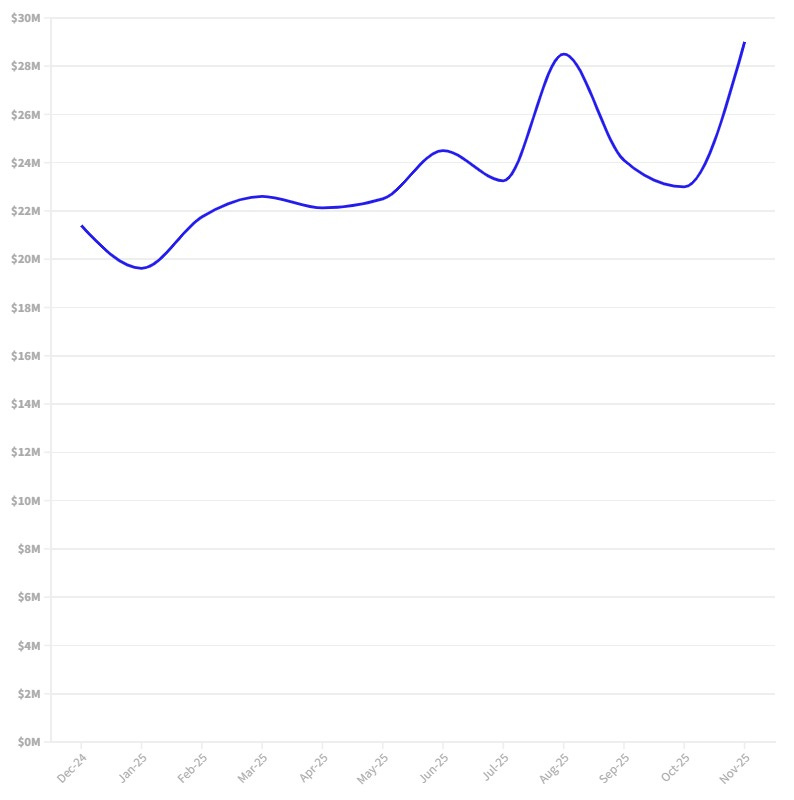
Seed
Median Money Raised:
$3,842,500
Median Post-Money Valuation:
$29,000,000
Series A
Median Money Raised:
$16,500,000
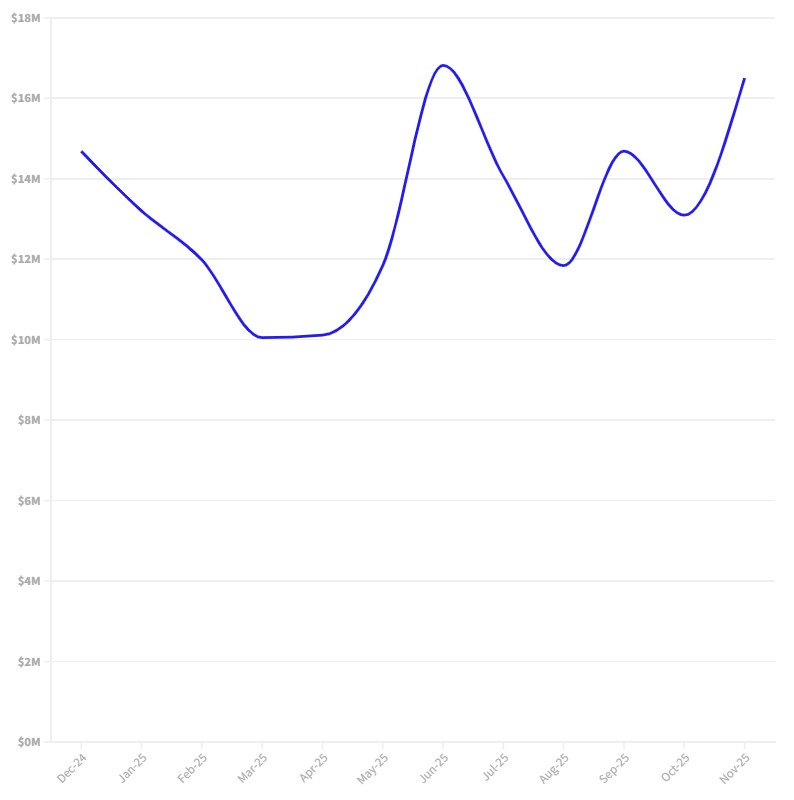
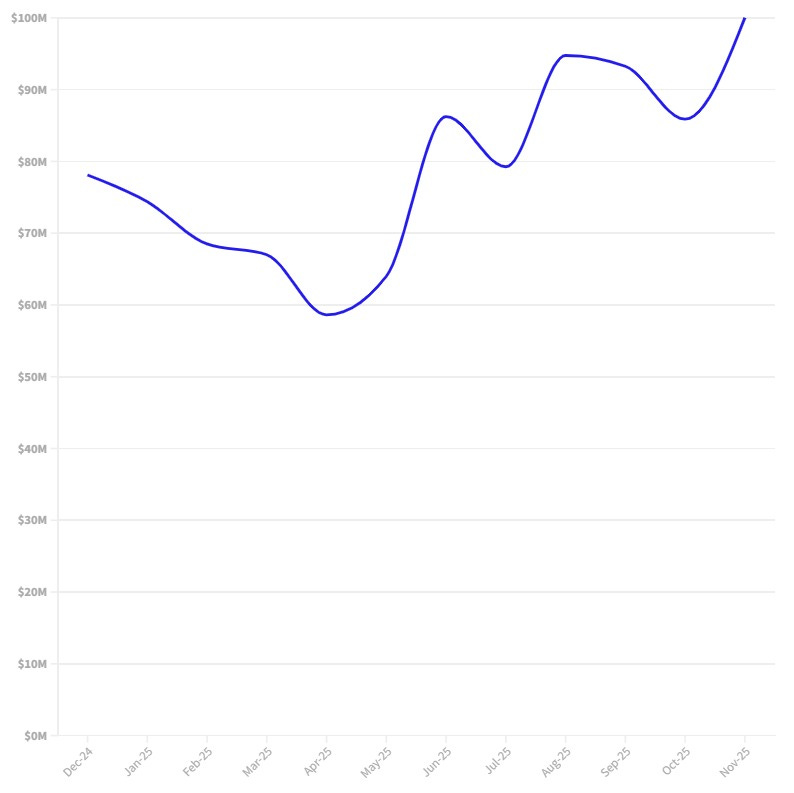
Median Post-Money Valuation:
$100,000,000
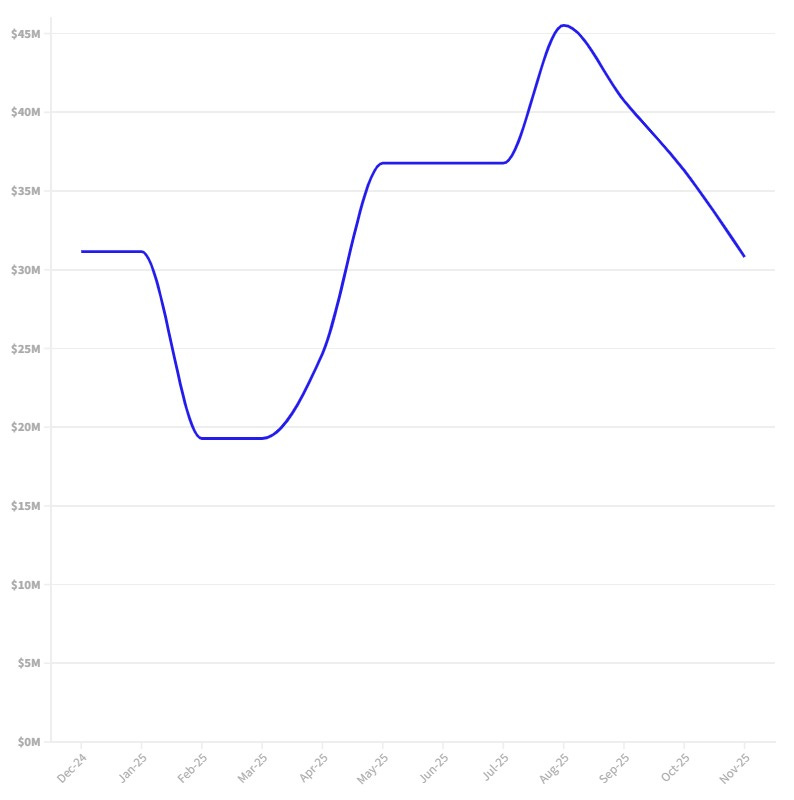
Series B
Median Money Raised:
$30,811,111
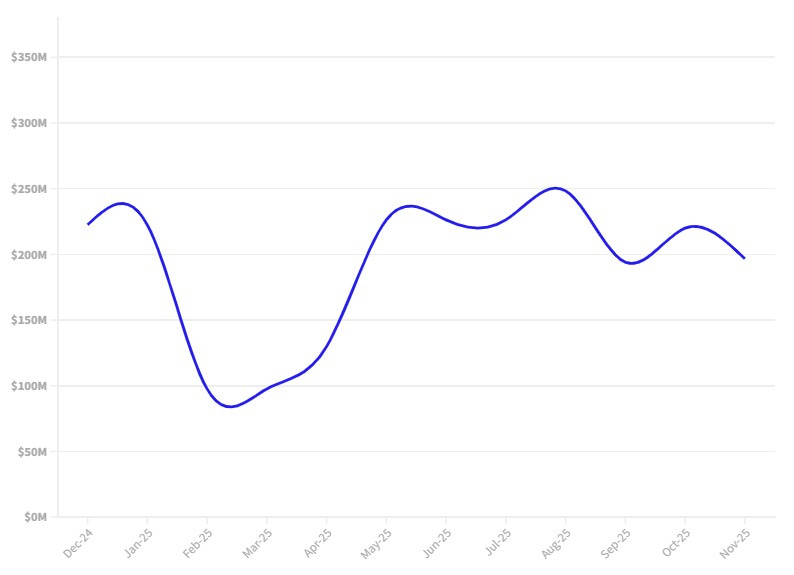
Median Post-Money Valuation:
$196,666,667
Startup Funding Guides
I’ve put together a series of guides to equip founders to excel at fundraising. These guides break down the deal term by term and give you negotiation tips so that you can speak to investors with confidence.
Convertible Note: Guide / Video
Should a Seed Round Cost $100,000?
A friend recently told me his relatively straightforward $7 million seed round costs over $100,000 in legal fees — much higher than initially quoted. Unfortunately, this is becoming more common. However, for an experienced startup law firm, a standard seed round based on NVCA docs should cost $20,000 to $40,000 all in. At my firm Westaway, this complete seed round package is a flat $24,000. No runaway legal costs. No surprise bills. Just transparent pricing. If you’ve got an upcoming fundraise, let’s talk.
Wild how the thing that builds the company can be the same thing that breaks the founder. Most people never look at the cost until it’s too late⚡️